
BullsEye Services Phoenix Az Logo
Location icon
Service Area
Phoenix, AZ
Post-Monsoon Commercial Property Cleanup Checklist for Phoenix Buildings

Post-Monsoon Commercial Property Cleanup Checklist for Phoenix Buildings

Arizona’s monsoon season officially closes on September 30. For property managers across the Valley, that date is less an ending than a deadline. Three months of haboobs, microbursts, and sudden downpours leave commercial buildings carrying a backlog of silt, debris, and water damage that does not resolve on its own — and that gets significantly more expensive the longer it sits.

The window between the last storm and the start of cooler weather is the best time of year to reset a property. Crews can work comfortably, materials cure properly, and repairs get made before winter rain finds the cracks the monsoon opened. Use the checklist below to walk your site and build a scope of work before the season’s damage becomes next year’s capital expense.

Why post-monsoon cleanup cannot wait until spring

Monsoon damage is cumulative and quiet. A drain partially blocked with gravel still drains — until the first winter storm, when it does not. Fine caliche silt tracked across a parking lot looks cosmetic, but it holds moisture against asphalt and accelerates surface breakdown. Mud staining on stucco and block sets permanently once it bakes through an October of direct sun.

For property managers, there is also a tenant-facing dimension. Retail centers and office buildings that still look storm-worn in November send a signal about how the asset is managed. Post-monsoon cleanup is one of the few maintenance categories that protects the building envelope and the leasing impression at the same time.

Clear roof drains, scuppers, and site drainage first

Drainage is the highest-consequence item on this list, so it comes first. Flat and low-slope commercial roofs across Phoenix collect gravel, palo verde litter, and blown debris in exactly the places water needs to exit.

  • Inspect and clear all roof drains, scuppers, and overflow outlets
  • Check that downspouts discharge away from the foundation and are not crushed or disconnected
  • Clear catch basins and site storm drains of gravel and landscape rock
  • Look for standing water or staining on the roof that indicates a drain is not carrying its share
  • Note any ponding near building entries, which points to a grading or drain capacity problem worth addressing before winter

Anything that suggests active water intrusion — interior ceiling stains, damp drywall at an exterior wall, efflorescence inside a stairwell — should be escalated immediately rather than added to a seasonal punch list. Properties without in-house facilities staff often bring in building engineers to handle the inspection and the immediate repairs in the same visit.

Sweep silt, gravel, and storm debris out of the parking lot

Monsoon storms move landscape rock into drive aisles and deposit a fine layer of dust and silt across the entire lot. Left in place, it clogs drains, tracks into tenant spaces, and holds moisture against the asphalt surface.

A full mechanical sweep is faster and considerably more thorough than a blower-and-broom pass. Scheduling parking lot and street sweeping in early October clears the accumulated season at once and gives you a clean surface to inspect for cracking and pothole formation.

While the lot is clear, note where debris collected. Recurring accumulation points usually indicate a drainage or grading issue, not a cleaning frequency issue.

Pressure wash façades, walkways, and entry areas

Dust storms followed by rain produce the streaked mud staining that shows up on nearly every Phoenix building in September. It is most visible on light stucco, painted block, and covered entry areas, and it does not weather off.

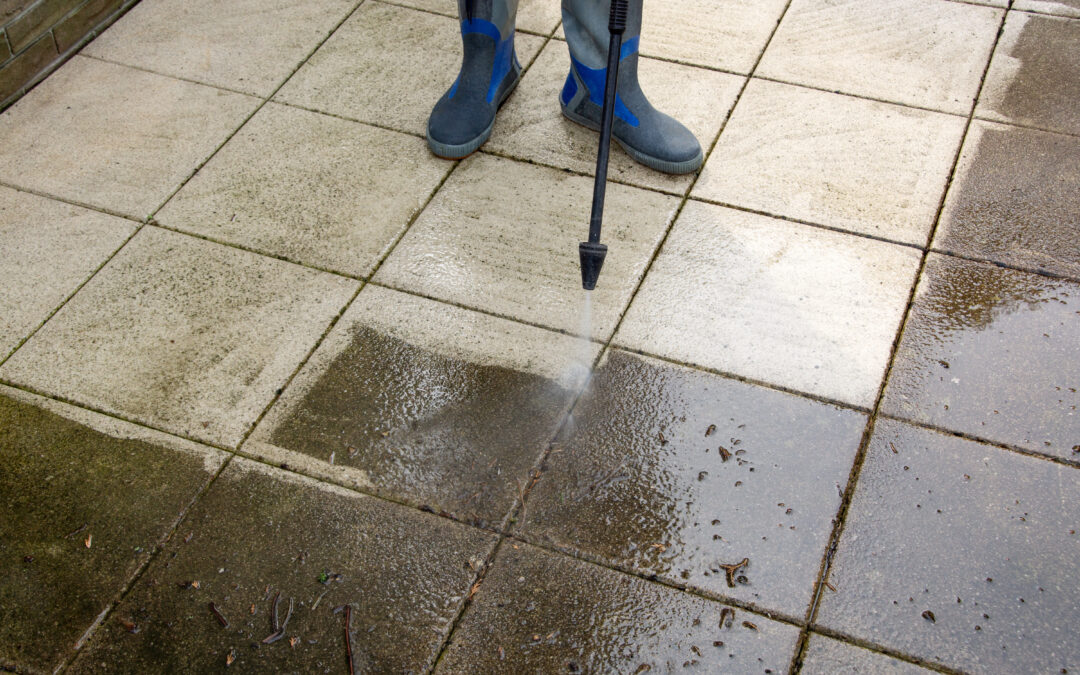
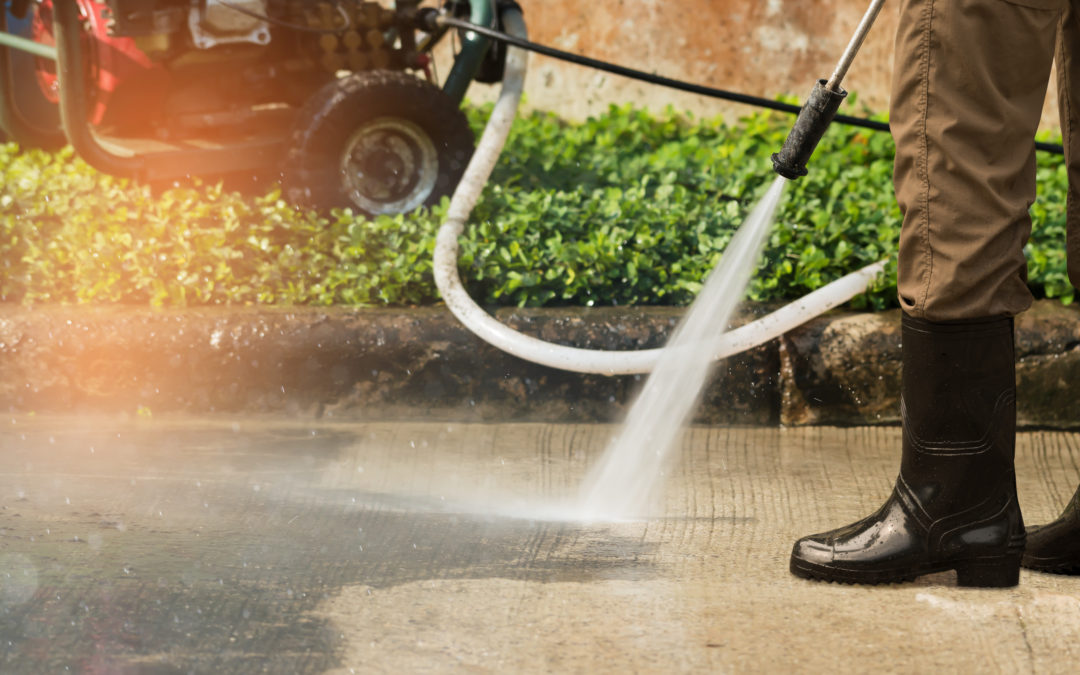
Sidewalks and entry aprons take a similar hit, with the added problem of oil and rubber that monsoon rain lifts and spreads across the surface. A commercial pressure washing pass should cover:

  • Exterior façades and parapet faces where runoff staining is visible
  • Entry walkways, sidewalks, and building aprons
  • Trash enclosures and service corridors
  • Covered parking columns and stairwell landings
  • Dumpster pads, which accumulate storm-carried debris and odor

Exterior glass takes the same dust-and-rain streaking, so it is usually more efficient to pair washing with commercial window cleaning than to schedule the two as separate mobilizations.

Inspect masonry, block walls, and stucco for water damage

Saturation is hard on masonry. After a heavy monsoon, look for white efflorescence bleeding through block, hairline cracking at mortar joints, spalling at the base of walls where water pooled, and separation where a block wall meets a structure or column.

Perimeter and screen walls deserve particular attention, since they take wind loading and standing water without the protection of a roof overhang. Small mortar failures identified in October are a straightforward repair; the same crack after a winter of freeze cycles at higher elevations in the metro is not. Damage that goes past surface staining should be evaluated by a masonry contractor before it is patched over or repainted.

Check striping, signage, and ADA markings

Blowing grit acts as an abrasive, and a monsoon season’s worth of it visibly degrades pavement markings. Fire lanes, accessible stalls, access aisles, and directional arrows are the items most likely to draw a compliance complaint, and they are also the ones that fade fastest.

Walk the lot and photograph any striping that has lost definition, along with faded or wind-damaged signage. Fall is the right time to schedule parking lot striping, since surface temperatures allow paint to cure properly without the extremes of midsummer. If you are not sure whether your markings are due, the art and science of parking lot striping covers how often a lot should be reassessed.

Walk the site for safety and liability items

Beyond cleanup, monsoon season creates conditions that become slip, trip, and fall exposure:

  • Lifted or undermined sidewalk sections where water eroded the base
  • Damaged or leaning light poles, bollards, and wheel stops
  • Downed or hanging tree limbs over walkways and parking areas
  • Landscape rock displaced into pedestrian paths
  • Damaged fencing, gates, and gate hardware
  • Exterior lighting knocked out during storms and not yet reported

Eroded or lifted walkway sections are the item most likely to turn into a claim, and they generally need concrete repair rather than a surface patch that will fail again next season.

Document the condition before you scope or file

Photograph everything before any work begins. Post-monsoon documentation supports insurance claims, justifies budget requests to ownership, and gives you a defensible record of property condition. Date-stamped images of drainage failures and structural damage are far more persuasive to an owner or carrier than a line item on a maintenance invoice.

Keep the documentation organized by building system rather than by date. It makes the following year’s budget conversation considerably easier.

Post-monsoon cleanup FAQs

When should post-monsoon cleanup be scheduled in Phoenix?

Early October, once monsoon season officially closes on September 30. Scheduling before the last storm risks repeating the work; waiting until winter means mud staining has baked in and drainage problems get discovered by the first winter rain instead of by an inspection.

How long does post-monsoon cleanup take on a commercial property?

Most single-building properties are handled in one to three days. A mechanical parking lot sweep is typically a single overnight visit, pressure washing runs one to two days depending on square footage, and masonry or drainage repairs are scoped separately once the inspection identifies them.

Does monsoon debris actually damage a parking lot?

Yes. Silt and landscape rock hold moisture against the asphalt surface and act as an abrasive under vehicle traffic, which accelerates surface breakdown and raveling. Debris also migrates into catch basins, which is where a cleanup issue turns into a drainage failure.

What post-monsoon damage should be documented for insurance?

Photograph anything storm-caused rather than wear-related: downed limbs and light poles, damaged fencing and signage, roof drain failures, water intrusion staining, and undermined or lifted sidewalk sections. Date-stamped images taken before repair work begins are what carriers and ownership will ask for.

Build this into next season’s maintenance plan

The most efficient version of post-monsoon cleanup is the one scheduled in advance. Properties that book sweeping, pressure washing, and a drainage inspection for the first week of October consistently spend less than those reacting to damage after it becomes visible.

BullsEye Services provides commercial property maintenance in Phoenix for office buildings, retail centers, HOAs, industrial facilities, and parking structures throughout the Valley. If you would like a walkthrough of your property before the season closes, call (480) 318-5147 or request a consultation.

Schedule Your Parking Lot Striping With BullsEye Services

Don’t wait for faded lines to become a safety issue or a bad impression. BullsEye Services delivers reliable, high-quality parking lot striping for commercial properties across Phoenix, Chandler, Glendale, Peoria, and the greater metro area.

Contact us today for a free assessment and keep your lot safe, compliant, and looking sharp year-round.

" " indicates required fields
Full Name 
Zip code 
Services Needed: 
By checking this box, you agree to receive text messages (including automated or prerecorded messages) from BullsEye Services at the phone number provided. Consent is not a condition of purchase. Message frequency varies. Reply STOP to cancel. Message and data rates may apply. Privacy Policy.

How Often Should You Pressure Wash Your Phoenix Property?

How Often Should You Pressure Wash Your Phoenix Property?

How Often Should You Pressure Wash Your Phoenix Property?

Living in the Valley means constantly battling dust storms, extreme heat, and monsoon rains. These elements can quickly leave layers of grime on your home or commercial building. Whether you’re in Chandler, Mesa, or downtown Phoenix, your property’s exterior is always exposed to the elements.

Regular pressure washing isn’t just about making things look good. It’s also about:

  • Preserving your property’s value: A clean exterior maintains curb appeal and protects your investment.
  • Preventing long-term surface damage: Dirt and grime can degrade surfaces over time, leading to costly repairs.
  • Creating a cleaner, safer environment: For businesses, a clean exterior welcomes customers and shows you care.
  • Maintaining compliance for commercial curb appeal: Certain businesses may have regulations regarding cleanliness.

But how often should you clean? And what surfaces need more attention than others? Let’s break it down.

General Guidelines by Surface Type

Driveways & Sidewalks

Phoenix driveways quickly collect tire marks, oil stains, and desert dust. Sidewalks also see a lot of foot traffic and can accumulate residue from monsoon rains.

  • Recommended: Every 3–6 months
  • Tip: It’s a good idea to schedule a cleaning after each monsoon season to clear away the buildup.

Building Exteriors (Stucco, Brick, Siding)

The intense Arizona sun and constant dust can fade paint and settle deep into the pores of stucco. If your property is near busy roads or construction zones, you’ll notice buildup happening even faster.

  • Recommended: Every 6–12 months
  • Important: Soft washing is often the best and safest approach for delicate materials like stucco, painted wood, and older surfaces. You can learn more about our pressure washing services in Phoenix here.

Commercial Storefronts

First impressions truly matter, especially for businesses. Storefronts in Tempe and Gilbert that are highly visible should prioritize cleanliness to attract and welcome customers.

  • Recommended: Monthly or bi-monthly for high-traffic areas.
  • Optional: Consider weekly rinses during dust storm season to keep things sparkling.

Parking Garages & Lots

From oil spills to exhaust residue, parking garage surfaces and lots can quickly show wear and tear.

  • Recommended: Quarterly
  • Also consider: We can also help with striping touch-ups when your lot needs them

Seasonal Considerations for Pressure Washing

The unique climate in Phoenix means that different seasons can impact how often you should pressure wash.

Summer

  • High UV exposure can bake dirt and grime onto surfaces, making them harder to remove.
  • Tip: Early morning cleanings are best to avoid quick drying and potential streaking.

Monsoon Season (July to September)

  • Heavy rain and strong winds during this season can dump significant dust, debris, and create standing water, leaving behind stubborn residues.
  • Tip: Schedule cleanings immediately after the monsoon season ends to clear away the mess.

Winter

  • Cooler temperatures mean surfaces dry slower, but there’s generally less extreme buildup compared to other seasons.
  • Tip: Winter can be a good time for deep cleans on surfaces that may have been neglected throughout the year.

Factors That Influence Pressure Washing Frequency

Several factors can impact how often your Phoenix property needs a good cleaning:

  • Location: Properties in busy urban areas or near industrial zones often require more frequent cleaning.
  • Surface Type: Porous materials (like unsealed concrete) tend to get dirtier faster than sealed surfaces.
  • Tree Cover: Sap, pollen, and leaves from nearby trees can contribute to grime buildup.
  • Foot or Vehicle Traffic: High-traffic areas will naturally accumulate dirt more quickly.
  • Nearby Construction or Roadwork: Dust and debris from these activities can settle on your property.

Risks of Over- or Under-Cleaning

Finding the right balance is key when it comes to pressure washing.

  • Over-washing: Cleaning too frequently or using excessive pressure can damage delicate surfaces, especially stucco, older wood, or painted areas. This can lead to costly repairs.
  • Under-washing: Allowing grime to build up for too long can make it harder to remove later. Over time, embedded dirt can even cause permanent staining or degradation of your property’s exterior.

Tip: At BullsEye Services, our experienced technicians always assess your surfaces before cleaning. We recommend the safest and most effective method to protect your property and ensure a thorough clean.

Our Pressure Washing Service Areas

We’re proud to offer top-notch pressure washing services in:

  • Phoenix
  • Chandler
  • Gilbert
  • Tempe
  • Mesa
  • And many other nearby commercial zones!

Looking for other ways to maintain your property? Explore our general construction services here.

FAQs About Pressure Washing in Phoenix

Can I pressure wash during Arizona summers?

Yes, you can! However, it’s best to schedule cleanings during the early morning hours to prevent surfaces from drying too quickly, which can lead to streaking.

Is soft washing better for Phoenix homes?

For many Phoenix homes, especially those with stucco, painted wood, or older surfaces, soft washing is indeed a safer and more effective option. It uses lower pressure and specialized cleaning solutions to gently remove dirt without causing damage.

How do I know when it’s time to wash?

If you notice visible staining, pollen accumulation, dusty buildup, or general dullness on your property’s exterior, it’s a good sign that it’s time to schedule a cleaning.

Ready to Refresh Your Phoenix Property?

Not sure exactly how often your home or business needs to be cleaned?

Contact BullsEye Services today for a free inspection! We’ll provide a customized pressure washing schedule tailored to your property’s unique needs and the Phoenix climate. Let us help you keep your property looking its absolute best year-round!

Schedule Your Pressure Washing Service Today

Give your property the care it deserves. Contact BullsEye Services for a custom pressure washing plan that fits your schedule and budget.

" " indicates required fields

Full Name 
Zip code 
Services Needed: 
By checking this box, you agree to receive text messages (including automated or prerecorded messages) from BullsEye Services at the phone number provided. Consent is not a condition of purchase. Message frequency varies. Reply STOP to cancel. Message and data rates may apply. Privacy Policy.

What Surfaces Should Never Be Pressure Washed (And What to Do Instead)

What Surfaces Should Never Be Pressure Washed (And What to Do Instead)

Pressure Washing Isn’t Always the Answer—Here’s When to Avoid It

At BullsEye Services, we handle a lot of pressure washing across Phoenix, from dusty driveways in Chandler to commercial building exteriors in Mesa. While power washing is an excellent solution for most surfaces, not everything should be hit with high pressure.

Using pressure washing in the wrong places can cause cracks, water damage, paint removal, or even void warranties. Let’s walk through what to avoid—and what to do instead.


1. Roof Shingles

Arizona roofs get hit hard by the sun, and pressure washing only makes it worse. On asphalt shingles, high-pressure streams can strip away protective granules, loosen tiles, and even force water beneath the surface.

Instead: Soft washing or roof-specific cleaning systems use low-pressure water mixed with cleaners that remove grime without damaging materials.


2. Stucco Walls

Common in homes throughout Phoenix and Tempe, stucco is highly porous and prone to cracking under intense water pressure. Pressure washing can lead to breaks, water infiltration, and internal mold—especially during the monsoon season when humidity spikes.

Instead: Use a low-pressure setting with specialized nozzles or opt for soft washing with a safe cleanser designed for stucco surfaces.


3. Wood Decks and Fencing

Older wood structures are especially vulnerable. Pressure washing can gouge soft wood, splinter boards, or strip protective coatings, making them more vulnerable to heat and dryness.

Instead: Use a medium-pressure rinse with a fan tip, or hand-scrub sensitive areas. BullsEye can also apply protective sealants post-cleaning.


4. Vehicles, HVAC Units, and Electrical Boxes

While it’s tempting to blast away dirt, these delicate systems can be permanently damaged. Water pressure can force water into wires, dislodge components, or corrode metal fittings.

Instead: Clean around them by hand or use a low-pressure rinse at a safe distance. Leave detailed cleaning to specialists.


5. Cracked or Deteriorating Concrete

Pressure washing broken concrete can worsen cracks, lift surface layers, or loosen masonry joints. This is especially common in older commercial lots or sidewalks exposed to years of Arizona heat.

Instead: Have BullsEye inspect the surface first. If repairs are needed, we can recommend masonry work before performing any deep cleaning.


The BullsEye Difference

At BullsEye Services, we assess every job site before we start. Our team understands which surfaces can take the heat—and which need a gentler touch. That’s why Phoenix businesses trust us to protect their property while keeping it clean.

We offer:

  • Commercial pressure washing

  • Residential exterior cleaning

  • Sidewalk and driveway cleaning

  • Graffiti removal

  • Masonry and concrete assessments

Our team services Phoenix, Chandler, Mesa, Gilbert, Tempe, and surrounding communities.


FAQs About Pressure Washing in Phoenix

Q: Can I pressure wash painted surfaces?
Only if they’re properly sealed and in good condition. Otherwise, you risk stripping the paint or exposing the surface underneath.

Q: Does the Arizona heat make surfaces more vulnerable?
Yes—especially stucco and concrete. Prolonged sun exposure weakens materials, making them more likely to chip or crack under pressure.

Q: Is soft washing better for Phoenix homes?
In many cases, yes. Soft washing is safer for delicate surfaces and still removes dust, algae, and stains effectively.


Call to Action

Not sure if pressure washing is safe for your property?
Contact BullsEye Services for a free consultation. We’ll inspect your surfaces and recommend the best approach—whether that’s pressure washing, soft washing, or a tailored alternative.

Schedule Your Pressure Washing Service Today

Give your property the care it deserves. Contact BullsEye Services for a custom pressure washing plan that fits your schedule and budget.

" " indicates required fields

Full Name 
Zip code 
Services Needed: 
By checking this box, you agree to receive text messages (including automated or prerecorded messages) from BullsEye Services at the phone number provided. Consent is not a condition of purchase. Message frequency varies. Reply STOP to cancel. Message and data rates may apply. Privacy Policy.

The Benefits of Professional Masonry Repair for Your Commercial Property

The Benefits of Professional Masonry Repair for Your Commercial Property

Phoenix is known for its sun, sand—and stubborn grime. Whether it’s dust from the desert or stains from heavy foot traffic, your property’s exterior takes a beating.

That’s where pressure washing comes in.

Why Pressure Washing Is a Must in Arizona

Arizona’s climate brings:

  • Dust storms

  • Oil stains

  • Bird droppings

  • Graffiti

Left unchecked, these build up fast—and make your property look neglected.

Professional pressure washing keeps your exterior surfaces clean, safe, and sharp year-round.

Clean Property, Stronger First Impressions

When clients or tenants walk up to your building, what do they see? A clean sidewalk and spotless walls—or oil stains and graffiti?

Curb appeal matters. Regular pressure washing:

  • Boosts property value

  • Helps attract and retain tenants

  • Protects your brand’s image

Commercial Pressure Washing Done Right

At BullsEye Services, we handle tough jobs with top-tier equipment and eco-friendly cleaning solutions. We pressure wash:

  • Building exteriors

  • Walkways and entryways

  • Parking lots and garages

  • Dumpster pads and loading zones

No job is too dirty.

Don’t Wait for Grime to Set In

Grime doesn’t go away on its own. Over time, it becomes harder to remove—and causes long-term damage. Regular pressure washing:

  • Prevents surface degradation

  • Helps maintain fire code compliance

  • Creates safer walkways by removing slippery buildup

One Call Handles It All

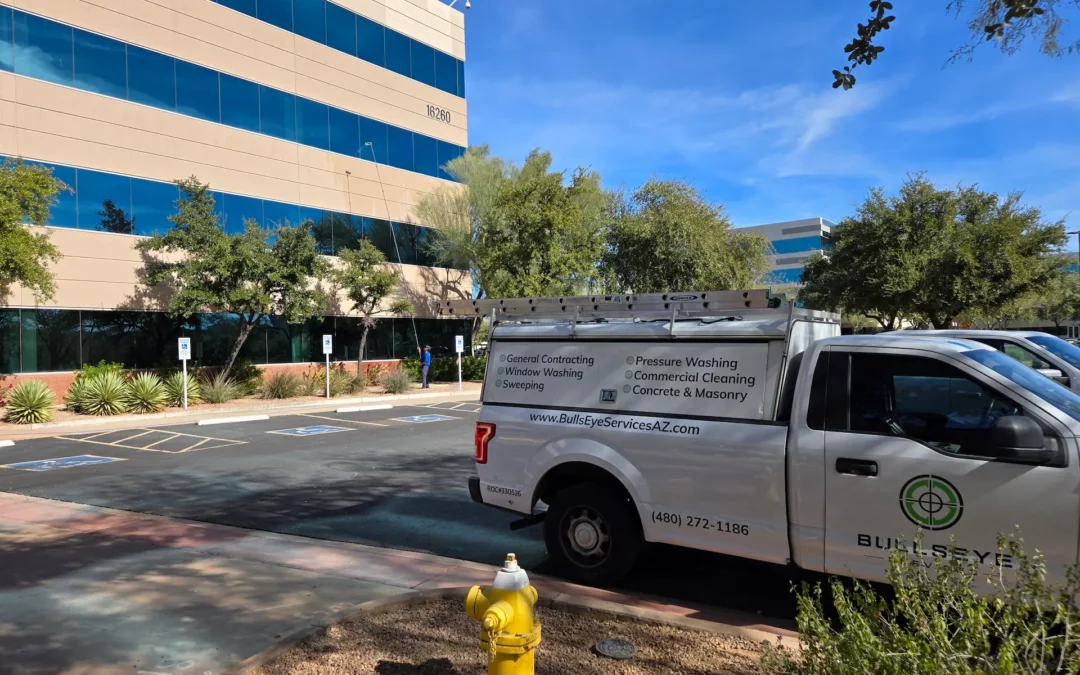
BullsEye Services is your go-to team for commercial property maintenance in Phoenix. From pressure washing to window cleaning and more, we make it easy to keep your facility spotless.

Schedule Your Pressure Washing Service Today

Give your property the care it deserves. Contact BullsEye Services for a custom pressure washing plan that fits your schedule and budget.

" " indicates required fields

Full Name 
Zip code 
Services Needed: 
By checking this box, you agree to receive text messages (including automated or prerecorded messages) from BullsEye Services at the phone number provided. Consent is not a condition of purchase. Message frequency varies. Reply STOP to cancel. Message and data rates may apply. Privacy Policy.